In searching for a supplement or sports nutrition manufacturer, you may have come across these terms: Contract manufacturing, private label, white label, and more. Though some may use these terms interchangeably to describe the kind of manufacturing they’re looking for, there are slight definition differences.
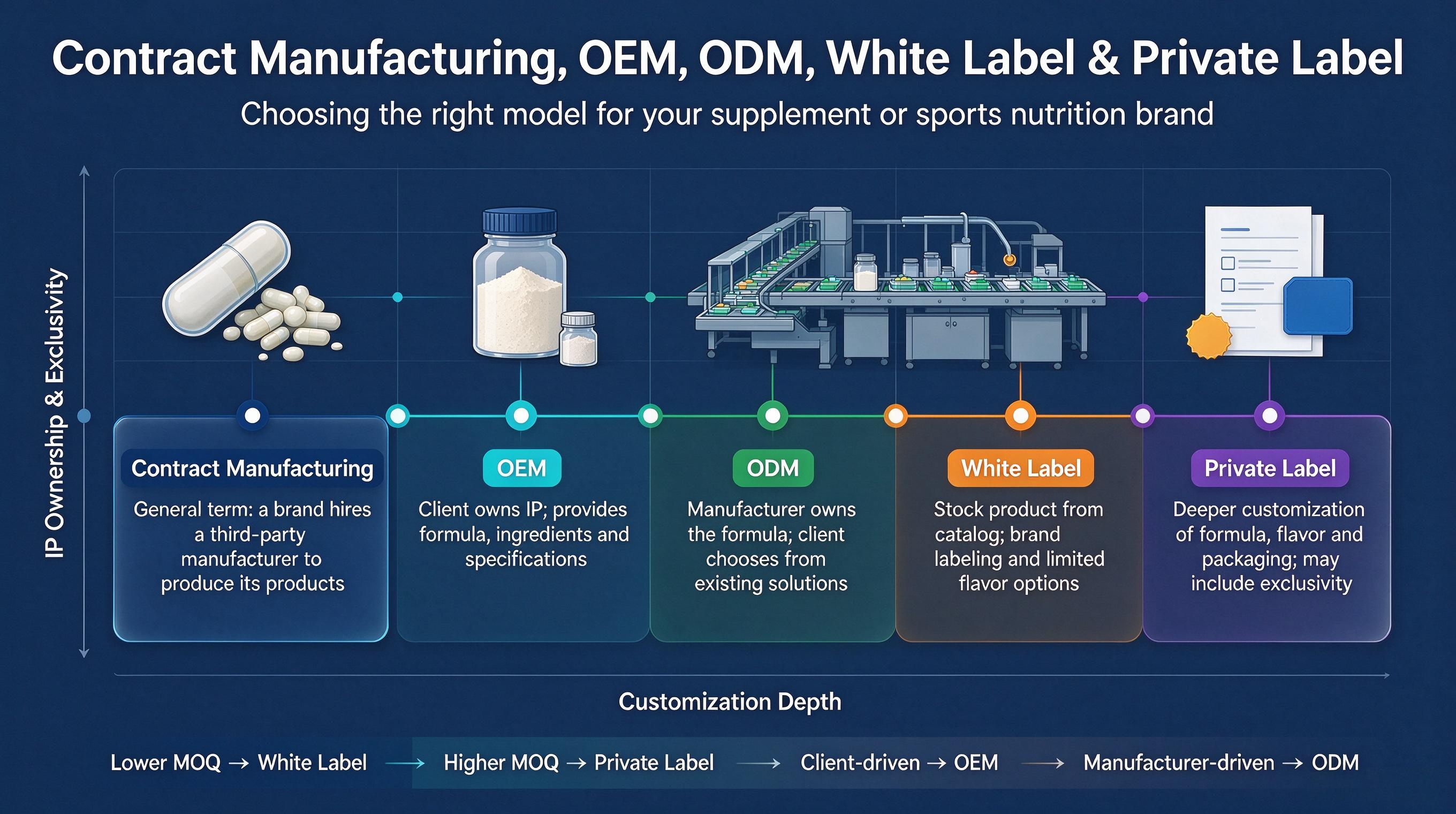
Contract Manufacturing – This is the most general term, used to describe any scenario in which a brand hires a third party manufacturer to physically produce their branded products. This encompasses all of the following terms.
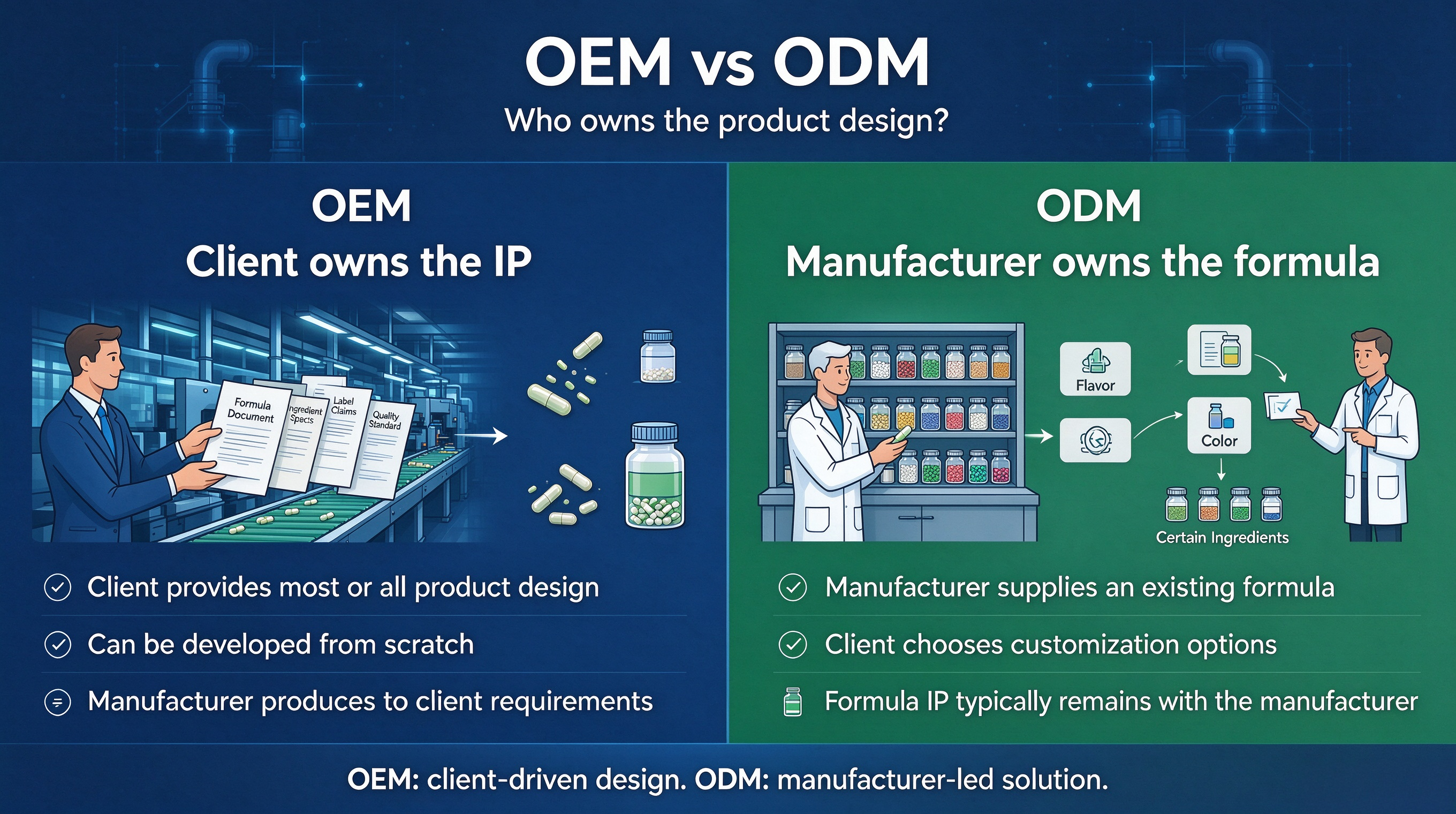
OEM – Original Equipment Manufacturer. Often used interchangeably with “contract manufacturing”, it technically refers to a scenario in which the client owns the IP of the product (formula, ingredients, specifications) and provides these to the manufacturer, resulting in a custom product for the client. The client dictates most or all of the product design. This can be considered developing the product “from scratch”. Sometimes, the customer will provide their desired label claims or specifications, and the manufacturer will develop the formula based on those requirements.
ODM – Original Design Manufacturer. The manufacturer owns a formula that the customer can use for their product. The client may have customization options, like certain ingredients included/excluded for label claims, flavor, and color.
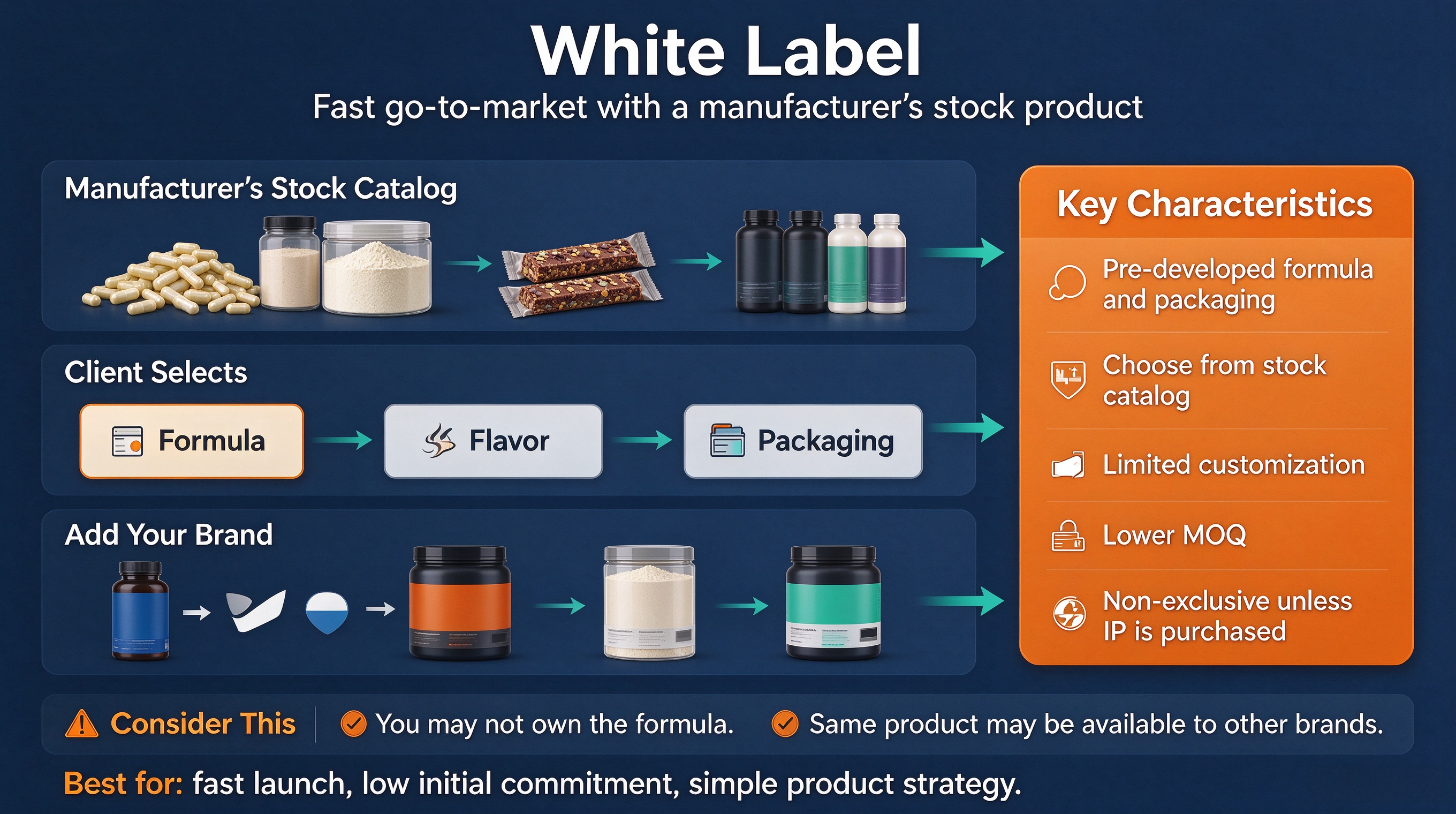
White label – this refers to a stock product that is pre-developed by the manufacturer, from formula to finished packaging. The customer chooses from a stock catalog and changes the brand information and picture, and sometimes chooses a flavor from a pre-determined list given by the manufacturer. This goes hand-in-hand with ODM manufacturing. This often means the client doesn’t have exclusivity on the product, so the same product could be offered to multiple customers.
This requires the least amount of effort by the customer, but the cons are that you will not own the formula unless you enter an agreement with the manufacturer to buy the intellectual property (IP) of the formula from them. If you don’t own the formula, other customers could also use this exact same formula (with a different label) and sell it on the market. Since there is so little customization, you will usually find smaller MOQs for white label products.
Private label– This refers to a manufacturer’s stock product that has deeper levels of customization, like changes to the formula, flavoring, and packaging options. An example would be asking the manufacturer to tweak their existing formula/flavor, or swapping box packaging for bottles. This formula would still be owned by the manufacturer, but may involve an exclusive relationship where no other brand can buy that product.
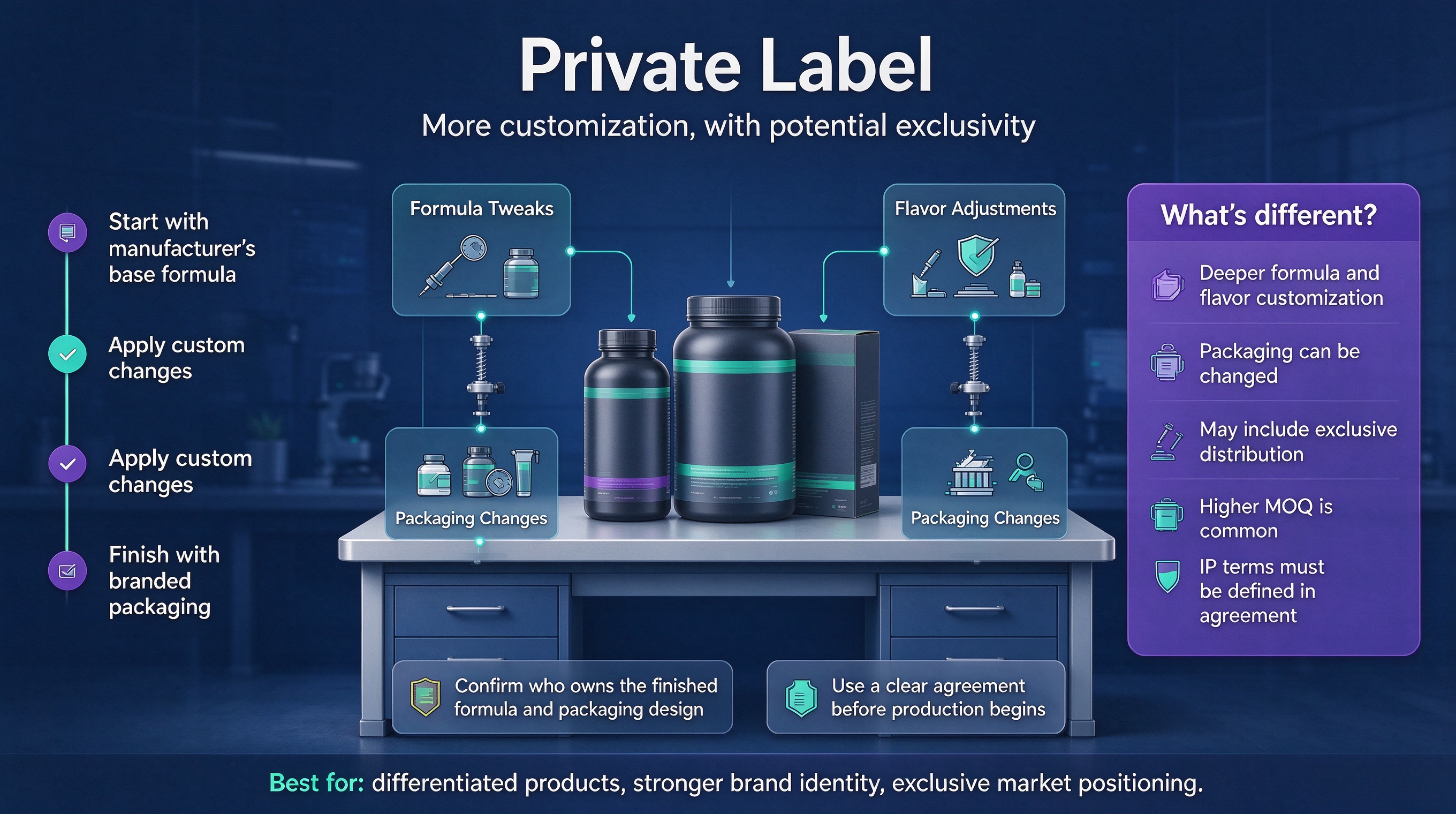
The pros are that you have more control over the final product and may own some of the IP, but you must ensure you’ve signed an agreement over who owns what, especially if the manufacturer developed the finished formula and the finished packaging design for you. Since there is more customization, manufacturers will usually require a higher MOQ to start production.